
Operations
Why Fast WhatsApp Response Times Matter for SMEs
Fast WhatsApp replies help SMEs build trust, protect sales opportunities and keep daily operations moving, but the real improvement comes from a better team workflow.
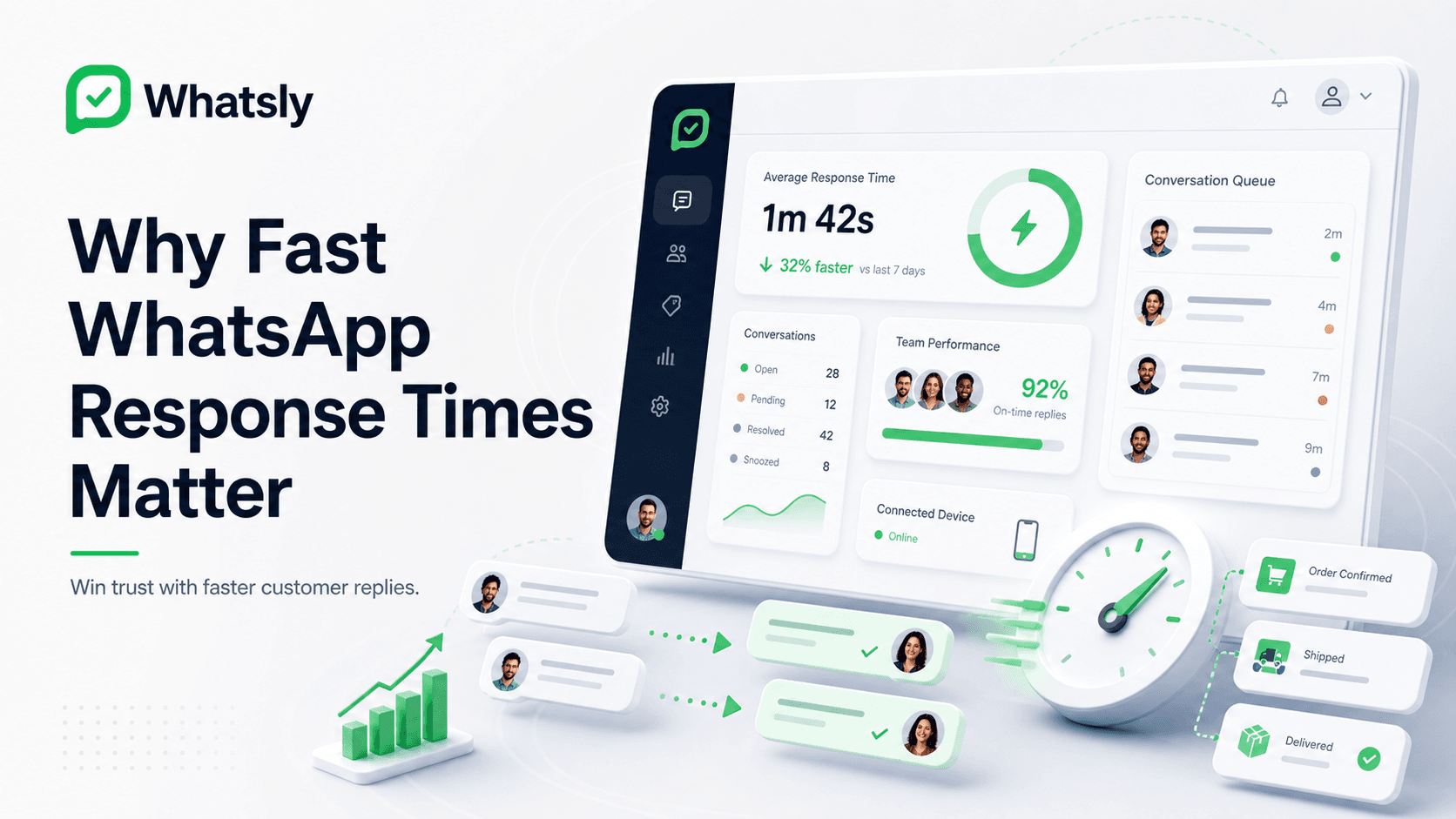
For many small and medium businesses, WhatsApp is not simply another channel. It is where customers ask whether an item is available, confirm delivery details, check payment status, request support and decide whether to buy.
That makes response speed a business metric, even if the team does not formally measure it yet.
Customers read delays as uncertainty
When a customer sends a WhatsApp message, they expect a practical answer. A slow reply can feel like:
- The business is unavailable.
- The order is not being handled.
- The product may not be in stock.
- The service may not be reliable.
- A competitor may answer first.
Fast replies build confidence before the transaction is complete.
Speed depends on workflow, not effort
Most teams are not slow because they do not care. They are slow because the workflow is fragmented. The WhatsApp device may be with one person, the order details may be in another system and no one may know who is responsible for the next response.
Asking people to reply faster does not solve that system. Response time improves when the team can:
- See incoming conversations in one workspace.
- Search the prior customer history.
- Use consistent replies for common questions.
- Give the right teammates controlled access.
- Connect order or booking events to the customer conversation.
- Check whether the connected number and message workflow are operating correctly.
The result is less manual chasing and fewer missed replies.
What to measure first
SMEs do not need a complex analytics project to begin. A few practical questions can reveal the main gaps:
- How many conversations are waiting for a reply?
- How long does the first response take?
- Which questions are repeated most often?
- Which replies require information from another system?
- Which messages failed to send?
- Which conversations still need a follow-up?
These signals help an owner improve daily operations without creating dashboard overload.
Use shared history to reduce repeated work
When an authorized teammate can see the prior conversation, the customer does not have to explain the request again. The operator can review previous questions, files and messages before writing the next response.
This is especially valuable when a shift changes, an owner is unavailable or a sales conversation becomes a support question.
Use templates carefully
Templates help with repeated questions about prices, opening hours, appointments, payments and delivery. They should be a starting point rather than a reason to ignore the customer’s specific request.
Review the context, adjust the message and make the next action clear.
Connect the information needed for the reply
If most of the delay comes from opening another system, a focused integration may help more than another set of templates.
WooCommerce, early-access Shopify workflows or the Whatsly API can connect selected order, payment or status events to the communication process. The integration should bring the useful event into the workflow without trying to copy every piece of commerce data.
Fast replies still require responsible messaging
Speed should not become spam. Healthy WhatsApp operations still require lawful contact collection, appropriate consent, reasonable send pacing, clear team access and prompt handling of opt-outs.
The best system helps a team reply faster to real customers while reducing duplicate sends, accidental outreach and unsafe automation.
Improve one workflow at a time
Choose one category, such as new sales enquiries or order-status questions, and review two weeks of conversations.
Ask:
- Where did the customer wait?
- What information did the operator need?
- Could the prior history answer the question?
- Would a reviewed template help?
- Does one business event need a focused integration?
Fix the largest source of delay before automating additional steps.
The Whatsly approach
Whatsly gives SMEs a shared foundation for WhatsApp conversations: connected business numbers, searchable history, team access, reusable messages and focused integrations.
That foundation helps the team respond quickly without losing control of customer context or the final message.